People Infrastructure
Built for Growth.
You have built something worth protecting. When your team grows faster than your people systems can keep pace, the gaps become costly. Harmonix Strategies embeds with your leadership team as your fractional HR executive, bringing the structure, compliance, and people strategy your organization needs at this stage of growth.
Growth exposes every gap
you have been working around.
Most organizations do not discover their people infrastructure gaps through strategy. They discover them through a termination that goes wrong, a misclassification that triggers penalties, or a key hire who walks out the door. By then, the cost of inaction is already real.
"The organizations that build strong people infrastructure before they need it are the ones that scale without breaking."
The Harmonix
Scaling Framework
Every engagement is organized around four interconnected pillars, sequenced to match where your organization actually is. No generic roadmaps. No off-the-shelf solutions. The framework is built around your stage of growth.
Every engagement is personal. So is every result.
Finding Harmonix Strategies was a turning point. Sean came in with clarity, structure, and a level of expertise I simply did not have access to before. He ensured my hiring practices were sound and that my policies and procedures were fully compliant, things I had not realized were leaving me exposed. What I appreciated most was that I never felt judged for not having it all figured out. I felt supported. Harmonix took something that was weighing heavily on me and handled it with professionalism and care. As a CEO, being able to remove that from my plate and trust that it is in good hands is invaluable. I wholeheartedly recommend Harmonix Strategies to any business owner who is serious about building the right foundation.

Built for organizations
building something that matters.
Harmonix works with organizations across sectors where people are the product and the stakes of getting HR right are high.
What the work
actually produces.
HR outcomes are genuinely hard to quantify — and Sean is not going to manufacture precision that does not exist. What he can tell you is that every client who has engaged Harmonix has left with documentation, structure, and clarity they did not have before. That is the baseline. Everything above it is what good people infrastructure makes possible.
HR leadership thinking,
delivered directly.
The People Signal is Sean's newsletter on the people challenges that growing organizations face and how to navigate them well. Practical, direct, and grounded in real experience.
No generic HR content. No buzzword roundups. Just the kind of thinking that comes from someone who has led people strategy at the VP level and built infrastructure from the ground up.
People First.
Always.
Harmonix Strategies exists to help scaling organizations build the people infrastructure they need to grow with clarity, confidence, and care. We are not a generic consulting firm. We embed with leadership teams, understand the organization, and build what is actually needed for the stage of growth.
Built from a moment
he kept witnessing.
Early in his career, Sean watched a team fall apart — not because the people were wrong for the work, but because nobody had built the structure around them. Leadership turned over unexpectedly. There was no succession plan, no documented process, no policy framework to hold things steady. People who had been committed and capable suddenly had no one to lean on and no system to fall back on.
He watched it happen again at another organization. Then again at another. Each time, the breakdown was not about talent or mission or funding. It was about infrastructure — the thing nobody had prioritized because everything was moving fast and it seemed like it could wait.
It cannot wait. Sean founded Harmonix Strategies because he decided to stop watching it happen and start building the thing that prevents it. Not after a crisis. Before one.
"Growing organizations should not have to be one leadership departure away from crisis."
Sean Alexander, Founder"People are not a cost center or a liability or a compliance obligation. They are the reason the work matters. Build the infrastructure around them accordingly."
What we believe
about organizations.
People are the foundation of every thriving organization. When the structure around people is clear, equitable, and intentionally built, everything else becomes possible. Culture, growth, mission. None of it holds without the right foundation underneath it.
We work with growing organizations that have big aspirations and limited internal resources. Our job is to give those organizations access to executive-level HR leadership through a model that fits what they actually need at this stage of growth.
What sets Harmonix apart is not just expertise. It is the approach. We operate as embedded partners, not outside consultants. We understand the realities of what it means to build, and we bring structure and calm to complexity.
What makes us
different from the rest.
Fractional
HR Leadership
Executive-level HR leadership without the overhead of a full-time senior hire. Harmonix embeds with your leadership team as your fractional HR executive, delivering people infrastructure, compliance, employee relations, talent systems, compensation, and culture as an embedded partner, not an outside vendor.
Every element of people leadership,
right-sized for your stage.
Finding Harmonix Strategies was a turning point. Sean came in with clarity, structure, and a level of expertise I simply did not have access to before. He ensured my hiring practices were sound and that my policies and procedures were fully compliant, things I had not realized were leaving me exposed. What I appreciated most was that I never felt judged for not having it all figured out. I felt supported. Harmonix took something that was weighing heavily on me and handled it with professionalism and care. As a CEO, being able to remove that from my plate and trust that it is in good hands is invaluable. I wholeheartedly recommend Harmonix Strategies to any business owner who is serious about building the right foundation.
"I never felt judged for not having it all figured out. I felt supported."
Kendall Session · CEO and Principal, Session and AssociatesHow a Harmonix
engagement works.
"When growth gets complex, leadership matters."
The Harmonix
Scaling Framework
Every engagement is organized around four interconnected pillars. We do not work through them in isolation — we build them in the sequence that makes the most sense for where your organization is right now.
Harmonix Works Best
When This Is True
Fractional HR Leadership is not for every organization. It is built for a specific kind of leader at a specific stage of growth. Here is how to know if this is the right conversation to have.
We would rather tell you this upfront than take on an engagement that does not serve you well.
What most leaders ask
before they call.
The questions below come up in almost every first conversation. If yours is not here, the easiest way to get an honest answer is to book a free call.
Book a Free CallHow We Get to Work
HR Compliance Is Not
Optional. It Is
Infrastructure.
Most organizations do not discover their compliance gaps until something goes wrong. A terminated employee files a claim. An audit reveals missing documentation. A policy that was never written becomes a liability. Harmonix Strategies helps you close those gaps before they cost you, protecting your people and your business at the same time.
Law Expertise
Development
Assessment
Frameworks
Compliance Is Not
a Checkbox. It Is Protection.
HR compliance is the body of employment laws, regulations, and documentation standards that govern how organizations treat their people. It covers how you hire, how you manage, how you compensate, how you separate, and the documentation that proves you did all of it consistently and fairly.
For growing organizations, compliance is often the last thing that gets attention until it becomes the only thing. A missing policy, an inconsistent practice, or an undocumented termination can expose your organization to claims, audits, and penalties that derail momentum and damage trust.
Harmonix Strategies approaches compliance not as bureaucracy, but as the infrastructure that protects your people and makes your organization sustainable.
The Compliance Risks That
Catch Organizations Off Guard
These are the six areas where growing organizations most frequently carry undetected compliance risk. If any of these feel familiar, a compliance audit is the right next step.
The HR Compliance
Starter Checklist.
Not sure where to start? This free checklist covers the foundational documentation, worker classification rules, and recordkeeping basics every organization needs in place — whether your team runs on W-2 employees, 1099 contractors, or both.
It is not a substitute for a full compliance audit. It is the starting point before one.
Targeted expertise for
your compliance posture.
Organizations That Cannot Afford to Find Out the Hard Way
HR compliance consulting is for leaders who understand that prevention is always less expensive than defense. You do not have to have experienced a claim, an audit, or a termination gone wrong to invest in compliance. The best time to close your gaps is before something forces you to.
How a Compliance Engagement Works
Featured Engagement
"Sean built the structure we needed to operate with integrity and confidence. He did not just hand us a document and walk away."
Grethal Davis · Board Secretary, Kingdom Life MinistriesNonprofit Governance and Compliance Framework — Faith-Based Organization, Las Vegas, NV
A 501(c)(3) faith-based organization was navigating questions about pastoral authority, financial oversight, and board accountability with no documented governance framework in place. Harmonix Strategies developed a comprehensive governance memorandum addressing board responsibilities, financial controls, separation of duties, conflict of interest policy, and whistleblower protections, aligned with Nevada nonprofit statutes, IRS Publication 4221-PC, and Sarbanes-Oxley provisions applicable to nonprofits.
Consulting
"Sean built the structure we needed to operate with integrity and confidence. He did not just hand us a document and walk away."
Grethal Davis · Board Secretary, Kingdom Life MinistriesDo Not Wait for a Claim
to Close Your Compliance Gaps
The free consultation is a real conversation and not a sales call. We will talk through your organization's current state, identify the highest-risk areas, and give you a clear picture of what a compliance engagement with Harmonix would look like. No pressure. No obligation. Just clarity.
Or reach us directly at info@harmonixstrategies.com | (678) 787-4468
HR That Understands
What You Are
Actually Building.
Mission-driven HR is not a different discipline. It is the same compliance, the same structure, the same rigor, applied with one critical difference: it never separates your people practices from the reason your organization exists. Culture is not a value statement on the wall. It is embedded in every policy, every hire, every conversation.
At Harmonix, mission-driven is synonymous with nonprofit. It describes any organization whose people practices have to answer to something beyond profit: a cause, a congregation, a community, a calling.
The HR foundation is largely the same as any growing organization. What changes is what that foundation has to hold.
Mission-Driven HR Is
Not a Different Discipline.
Compliance is still compliance. Wage and hour law does not change because your mission is good. A handbook still needs to exist. A board still needs governance documentation. The mechanics of HR infrastructure are the same whether you are a law firm or a food pantry.
What changes is the relationship between the policy and the purpose. In a mission-driven organization, HR cannot live in a binder disconnected from why people showed up in the first place. The handbook has to sound like the organization. The hiring process has to screen for mission fit, not just skill fit. The performance conversation has to hold both accountability and care, because both are core to what the work requires.
Get this wrong and you end up with one of two failure modes: an organization with heart and no structure, or an organization with structure and no soul. Harmonix exists to build the version that has both.
Your organization has a Theory of Change
for its mission.
Does it have one for its people?
Most mission-driven organizations can map exactly how their programs create impact in the world. Almost none have ever applied that same discipline to their own people infrastructure. Harmonix starts there.
The framework below follows established Theory of Change methodology, informed by the Center for Theory of Change and the Annie E. Casey Foundation, applied to people infrastructure instead of program design.
Building this pathway means deciding whose voices are at the table and who holds decision-making authority. For mission-driven organizations, that question is not a side conversation. It is part of the methodology — built into the conversations from the first one, not addressed after the framework is already finished.
This is the standard methodology. The real work is the series of conversations that fill it in honestly for your organization specifically — which is where the Harmonix engagement actually begins.
The Series of Conversations
Before any policy gets written, Harmonix walks every mission-driven client through the first three stages of this framework together. This is not a workbook you fill out alone. It is facilitated, in person, by Sean. Below is where it starts.
Built for Organizations Carrying a Mission
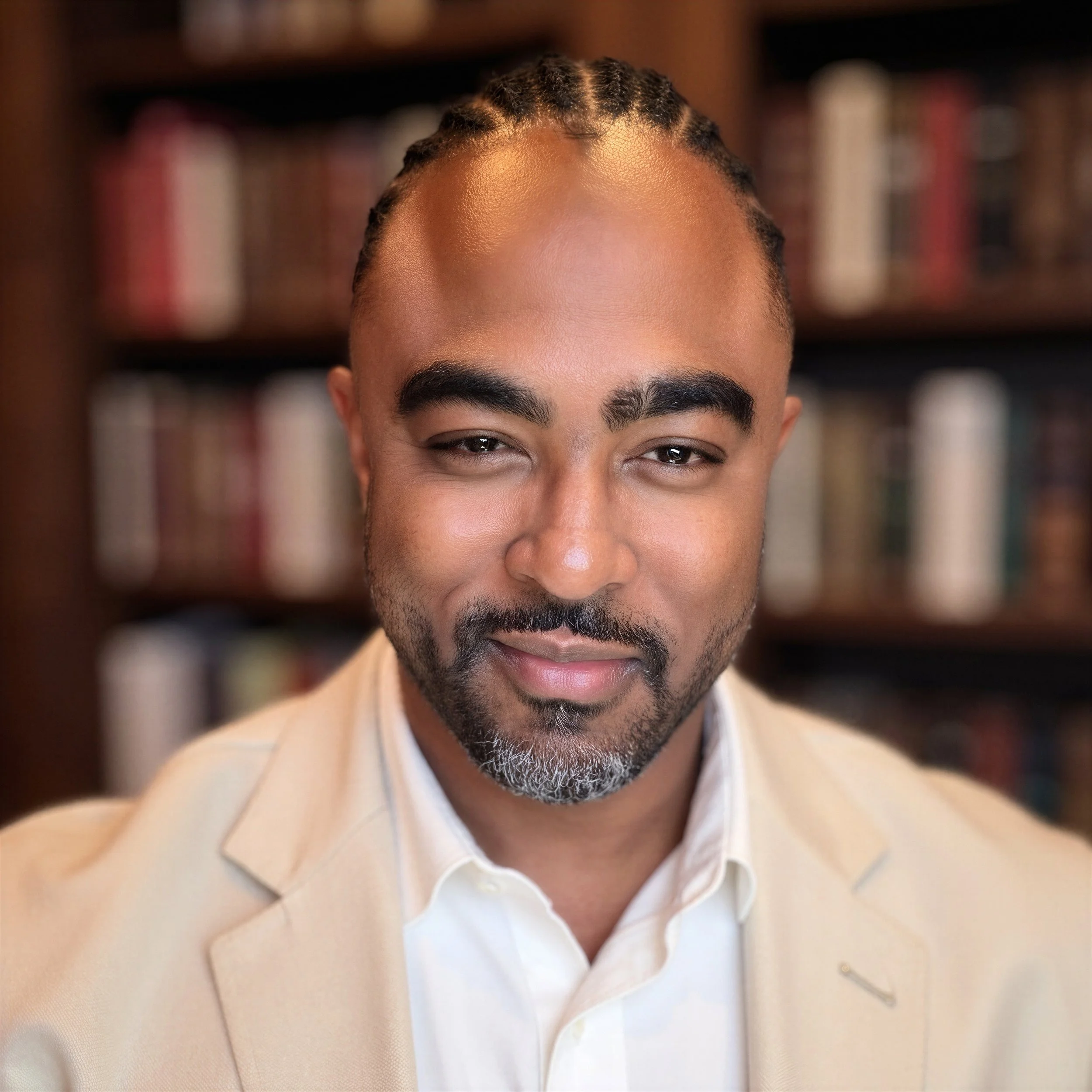
Sean
Alexander
Sean Alexander is a VP-level HR and Operations executive with deep experience across the full spectrum of people leadership: compliance, workforce strategy, compensation, employee relations, talent systems, HRIS optimization, payroll, benefits, and organizational design.
He founded Harmonix Strategies because he saw the same problem playing out in organization after organization. Ambitious leaders building meaningful things, without the people infrastructure to support what they were building. Harmonix is his answer to that.
VP-level leadership
across every domain.
Sean brings VP-level experience across the full range of people and operations functions. He has built HR infrastructure from the ground up, guided organizations through complex workforce change, and served in advisory capacity to boards navigating governance and people strategy challenges.
He has deep, applied expertise in employment law and HR compliance. Not generic advice. Specific, context-driven guidance built on years of navigating real situations with real organizations.
Prior experience includes people and operations leadership for mission-driven and education-focused organizations, where he developed a particular focus on building people infrastructure in under-resourced environments where the stakes of getting it right are high.
What Sean Brings To
Every Engagement
Every Engagement Is
Led Personally.
No handoffs to junior staff. No templated deliverables. No one-size-fits-all playbooks. You get a seasoned HR executive who is invested in your organization's success and accountable to your results.
If you are ready to build the people infrastructure your organization needs to grow with confidence, the first conversation is free.
Let's talk about
what you're building.
Every conversation starts with listening. Tell us where your organization is, what is keeping you up at night, and what you are trying to build. We will take it from there.
Thirty minutes.
No pitch.
Most people book this call because something in their people operations is already costing them money or sleep. You do not need to prepare anything. Pick a time below, tell me what is happening, and we will work out together whether Harmonix is the right fit for it.
Pick a time that works.
Discovery Call
A direct conversation about what is happening inside your organization right now.
Every Harmonix engagement is led personally by Sean. You will not be handed to an associate.
Prefer to write first? or email info@harmonixstrategies.com
AI does not close the gap.
It accelerates whatever is already there.
You are probably already using AI for something at work. Maybe drafting an email you did not have time to write. Maybe a manager on your team is using it to document performance conversations without telling anyone.
None of that is wrong. But in HR, none of it is without risk either.
If your foundation is solid, AI helps you move faster. If your foundation has cracks, it helps you move faster toward a problem. This handbook was built to close that gap before AI can widen it.
Three tools. Different strengths.
All with real limits in HR.
The handbook covers all three — which task belongs to which tool, where each one creates risk in an HR context, and what a human being still has to be the one who decides.
100 prompts across every domain of HR leadership.
Plus: Know Your Tools — a side-by-side breakdown of Claude, Copilot, and ChatGPT for HR specifically. And Before You Prompt — five rules for responsible AI use that every HR leader needs to read before running a single one of these prompts.
You should not have to be an expert in everything to protect the people in your care. This handbook is for the founder who is running payroll and HR out of the same Google Drive. It is for the executive director who suspects their policies are out of date but has not had time to look. It is for the manager who is trying to do right by their people and just needs a place to start.
Built for the people doing the work with no safety net.
Get the handbook.
Use it today.
100 prompts. 10 HR disciplines. Three AI tools explained honestly. Every prompt includes the right tool, a human review note, and a tip to make the output actually usable.
Get Still HumanInstant download · Gumroad secure checkout